Every stage is a classroom, and we are both students and teachers in an evolving craft.
"Movement is language" — that metaphor guides how we see the expanding professional training for exotic dancing performers: technique becomes literacy, choreography becomes narrative, and safety protocols become grammar.
Workshops, certification programs, and university courses are reframing performance as disciplined artistry and legitimate vocational pursuit.
- Performers refine strength, anatomy knowledge, injury prevention, and business skills alongside expressive work.
- Educators adapt curricula to honor autonomy and diversity.
Formal training does not sanitize the edge or strip away sensuality; rather, it enlarges creative possibility and agency.
As communities build standards, share resources, and demand respect, the industry shifts from solitary apprenticeship toward collaborative professionalization.
This introduction charts that progression, centering performers’ voices as they claim expertise, negotiate stigmas, and design futures where their craft receives both technical rigor and cultural recognition.
Historical Context
We’ll trace how professional training for exotic dancers evolved from informal mentorships and theatrical traditions into organized curricula and standards.
Early roots:
- Vaudeville, burlesque, and club mentorships served as the foundation.
- Knowledge passed hand-to-hand through apprenticeships and on-the-floor coaching.
- These communal bonds were highly valued and carried forward into later practices.
Codification of skills:
- Movement vocabularies (for example, pole dance technique) were formalized.
- Stagecraft, costume work, and audience engagement were integrated into training programs.
- Peer-led workshops and shared syllabi helped standardize core competencies.
Recognition of gaps and a shift toward safety and consent:
- Consent training and performer safety were not always explicit in earlier models.
- Communities pushed to make consent, boundary-setting, and de-escalation central to instruction.
- Safe spotting and other physical-safety practices became core curriculum elements rather than optional add-ons.
Professionalization while maintaining solidarity:
- Apprenticeship models and peer mentorship preserved the communal, supportive ethos.
- Collective action transformed scattered practices into accessible, respectful programs.
- The resulting frameworks uplift performers, foster belonging, and prioritize safety and consent.
Training Models
Main training models currently used
1. Studio-based classes.
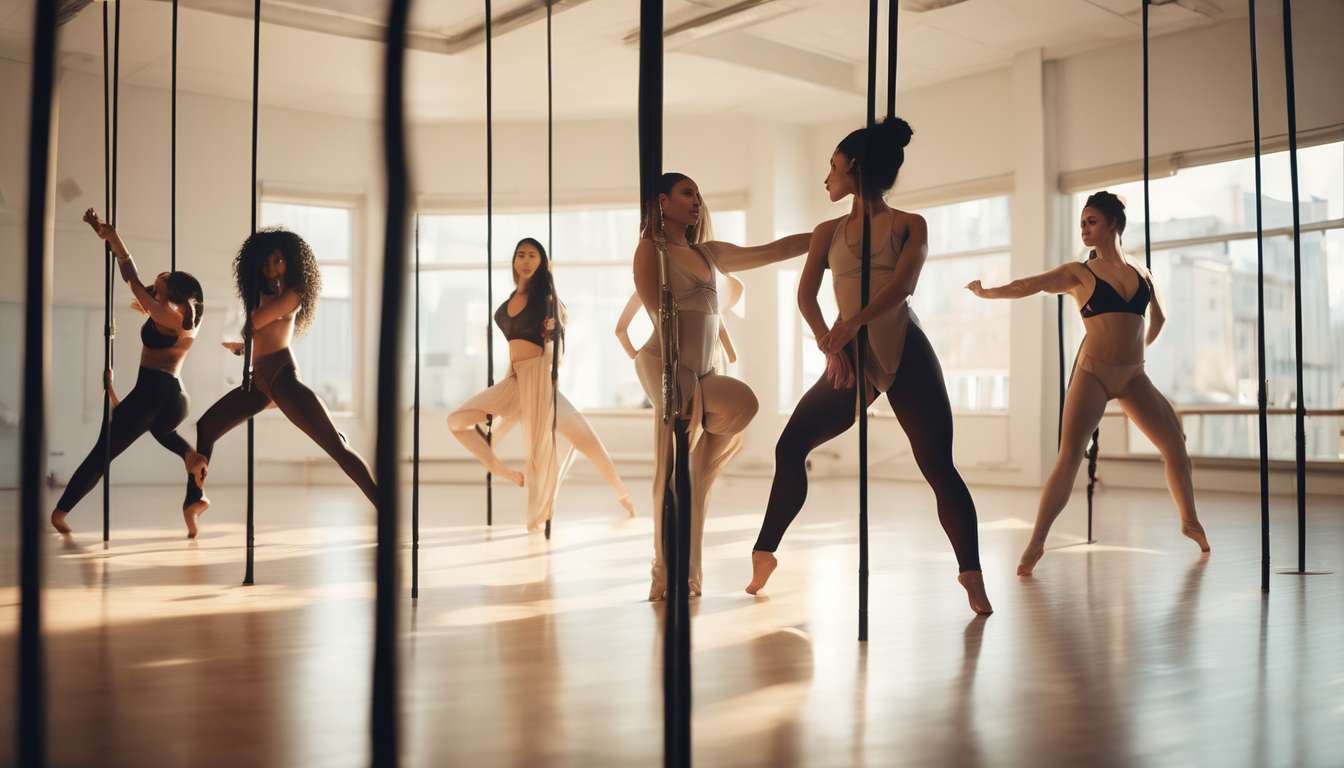
Studio-based classes offer structured schedules where pole dance and floorwork are taught alongside boundary-setting and consent training. They emphasize consistent technique, supervised practice, and a safe physical environment.
2. Apprenticeship and mentorship programs.
Apprenticeship and mentorship programs build community by pairing newer performers with experienced mentors who model professionalism, share venue norms, and reinforce performer safety during real shifts. These programs also foster ongoing peer support and on-the-job learning.
3. Certification courses.
Certification courses provide standardized curricula and recognizable credentials that venues and peers respect. They often include modules on consent training, legal responsibilities, and emergency protocols, giving performers a clear baseline of knowledge and expectations.
4. Hybrid approaches.
Hybrid models combine online theory with in-person practice. They let performers learn theory remotely and practice hands-on locally, which helps busy performers access consistent education while staying connected to local communities.
Values and common priorities across models
Inclusivity and accessibility.
We value inclusivity; choice of model often depends on access, goals, and the kind of collective we want to build.
Safety, consent, and dignity.
All models emphasize safety, consent, and belonging, with protocols that protect bodies and dignity.
Communication and community.
Across models, we prioritize clear communication, mutual support, and practical protocols that keep performers and venues aligned.
Technique and Conditioning
We focus on building specific technical skills and physical conditioning—strength, mobility, endurance, and recovery practices—that let dancers perform reliably and reduce injury risk.
We practice pole dance fundamentals alongside floorwork and transitions. Complex moves are broken into repeatable drills so everyone progresses together.
We prioritize progressive strength training for grip, core, and shoulder stability, and mobility routines that keep joints resilient and movement fluid.
We structure conditioning with interval-style endurance sessions and targeted hypertrophy work to support load-bearing tricks.
We embed recovery protocols — sleep hygiene, nutrition basics, and active recovery — to sustain long careers.
Technique sessions include spotting methods and clear communication cues so partners can work confidently.
We pair skill development with consent training modules focused on boundaries and workplace respect, reinforcing a culture where asking for help is normal.
By centering performer safety and mutual support, we build a community that trains hard, looks out for one another, and advances together with competence and care.
Safety and Consent
We prioritize clear, enforceable boundaries and practical safety protocols so everyone can train and work with confidence.
We build a culture where pole dance technique sits alongside consent training and performer safety, because skill without safety isn’t community.
We set expectations for touch, entrances, and stage interactions, and we teach verbal and nonverbal cues that let performers and patrons know what’s allowed.
We create reporting routes and de-escalation skills so people can act when lines are crossed.
- We provide clear, accessible reporting pathways.
- We train staff and regulars in verbal and nonverbal de-escalation techniques.
- We practice scenarios until responses feel natural.
We maintain equipment checks, space awareness, and spotting routines that reduce injury risk.
- Regularly scheduled equipment inspections and maintenance.
- Clear floor/space protocols to prevent collisions and ensure safe apparatus spacing.
- Standardized spotting and partner-support procedures.
We normalize rest, medical care, and mutual support.
- Encourage regular rest breaks and monitoring for fatigue.
- Make first aid and medical response procedures visible and practiced.
- Promote peer support and checking-in culture.
We embed consent training into onboarding and ongoing sessions so everyone—newcomers and veterans—feels empowered to state limits and honor others’.
- Mandatory consent and boundaries module during onboarding.
- Refresher sessions and workshops for continuing members.
- Role-playing exercises to practice setting and respecting limits.
We foster trust by listening, enforcing rules consistently, and responding compassionately to concerns.
- Active listening and confidential handling of reports.
- Consistent, transparent rule enforcement to build predictability.
- Compassionate follow-up and support for those affected.
Together, these practices keep our community safe, respected, and connected.
Curriculum Development
Overview — curriculum goals
We’ll design a progressive, competency-based curriculum that balances technical pole skills, safety protocols, consent practices, and performance-building. The curriculum is broken into clear modules so learners can see growth paths and know when they’re ready to advance.
Modular structure
- Fundamentals.
- Strength and conditioning.
- Advanced pole dance techniques.
- Stagecraft.
- Trauma-informed consent training.
Each module includes measurable outcomes, peer-reviewed drills, and supervised practice.
Safety and injury prevention
We center performer safety through mandatory workshops on injury prevention, spotting, and emergency response. Regular check-ins are scheduled to normalize asking for help and monitor wellbeing.
Consent integration
Consent training is integrated across scenarios — rehearsals, shoots, and live sets — so boundaries become habitual, not optional. This includes:
- Scenario-based role-plays.
- Communication scripts and language practice.
- Clear protocols for renegotiation and withdrawal.
Community and cohort learning
We create cohort-based learning to foster mutual support, including:
- Mentorship circles to share tips.
- Reflection sessions to build trust.
- Peer feedback structures.
Assessment and readiness
Assessment combines:
- Practical demonstrations.
- Written reflections on ethics and consent.
- Instructor feedback.
These elements measure both technical competence and ethical practice.
Overall aim
Together, we build a curriculum that teaches skills, protects bodies and dignity, and strengthens our community’s sense of belonging.
Business and Advocacy
We will teach dancers how to run sustainable businesses, negotiate fair pay, and advocate for legal protections and destigmatization.
We’ll cover bookkeeping, branding, contracting, and pricing so performers can set clear boundaries and earn consistent income.
We emphasize pole dance skills alongside entrepreneurship, showing how technique and marketing reinforce each other.
Our consent training modules are practical:
- They provide scripts,
- role-plays,
- and de-escalation tacticsso performers can protect autonomy in the workplace.
We prioritize performer safety by teaching hazard assessment, venue standards, and incident reporting procedures so everyone feels secure on and off stage.
We’ll coach on interacting with management, building alliances with sympathetic policymakers, and using data to make persuasive cases for reforms.
We invite members to share strategies and success stories, fostering mutual support without substituting for broader coalition work.
By combining business acumen, policy advocacy, and concrete safety practices, we create a shared pathway for dancers to claim professional respect, fair compensation, and the protections they deserve.
Community Collaboration
Partnerships with local organizations, venues, and advocacy groups
We’ll partner with local organizations, venues, and advocacy groups to build networks that amplify dancers’ voices, share resources, and coordinate community-driven safety and legal initiatives. Collaboration across roles and organizations will strengthen trust, improve on-the-job safety, and ensure every performer feels seen and supported.
Regular meetups and joint workshops
We’ll create regular meetups and joint workshops that center belonging, where seasoned pole dance instructors, managers, and peer leaders exchange best practices and listen to one another.
Practical consent training
We’ll run consent training sessions that are practical, scenario-based, and accessible, so everyone knows boundaries and de-escalation techniques.
Shared directories of vetted support services
We’ll develop shared directories of vetted support services — legal aid, healthcare, and mental-health counselors — and keep them updated together.
Standardized safety checklists and incident-response planning
We’ll standardize performer safety checklists for clubs and studios, jointly reviewing incident-response plans and communications protocols.
Mentorship program
We’ll cultivate mentorship pairings to help newcomers find community and skill guidance without judgment.
Coordinated advocacy campaigns
We’ll coordinate advocacy campaigns that reflect collective priorities and ensure that policy proposals are informed by real experiences.
Future Directions
Looking ahead, our program expansion will focus on safety, dignity, and sustainable career pathways for exotic dancers.
We will add advanced pole dance technique tracks, business skills, and health resources so performers can progress at their own pace.
We will deepen consent training integration by making it a routine part of every session and venue orientation and co-creating curricula with performers to reflect lived experience.
We will broaden outreach to allied services such as:
- legal aid
- mental health
- financial advising
so members feel supported beyond the club.
We will pilot portable workshops that bring performer-safety best practices into workplaces and online forums, and we will evaluate impact with participant-led metrics.
We will advocate for policy shifts that protect labor rights and access to benefits while preserving autonomy and artistry.
By centering collaboration, practical tools, and mutual accountability, we will build a resilient, inclusive network where every dancer is seen, heard, and equipped to thrive.
How do local zoning laws and licensing requirements specifically affect where exotic dancing performers can train and perform?
Zoning and licensing shape where training and performances can legally occur.
Local ordinances often restrict adult entertainment to specific districts and establish distance buffers from sensitive uses such as schools, churches, and residences. These rules commonly require special permits or business licenses for venues that host adult-oriented activities.
We support performers by navigating permit processes and advocating for fair, non-discriminatory rules. This includes helping with applications, interpreting local code, and representing performer interests to regulators.
We find and secure compliant rehearsal and performance spaces by identifying locations that meet zoning buffers and licensing requirements and negotiating with property owners and managers.
We collaborate with venues and regulators to expand safe, legal options for training and shows, working to create more equitable access to spaces while ensuring public-safety and community concerns are addressed.
What are some accessible options for performers with disabilities to participate in professional training programs?
We’re committed to inclusive access to professional training programs for performers with disabilities.
Accessible venues and facilities
- Seek venues that meet accessibility standards (ramps, elevators, seating, restrooms).
- Provide quiet spaces and sensory-friendly areas for rehearsal and breaks.
Adaptive equipment and class formats
- Offer adaptive equipment and tools tailored to different needs.
- Provide online and hybrid classes to increase accessibility and geographic reach.
Communication access
- Provide captioning, sign language interpreters, and clear printed or digital materials.
- Ensure accessible registration, materials in alternative formats, and accessible websites.
Individualized accommodations and affordability
- Invite and implement individualized accommodation requests.
- Offer sliding-scale fees or scholarships to reduce financial barriers.
Community and instructional support
- Provide peer support, mentoring, and buddy systems to foster belonging.
- Partner with disability advocates and trainers experienced in adaptive techniques so participants can learn safely and build skills.
Partnerships and continuous improvement
- Collaborate with disability advocacy groups and experienced trainers to shape programming.
- Regularly evaluate and adjust practices based on participant feedback to ensure programs remain inclusive and effective.
How do insurance and liability considerations differ for independent performers versus those employed by clubs when attending training courses or workshops?
Independent performers vs. club employees: insurance & liability — key differences
Independent performers usually must provide their own coverage.
This commonly includes liability insurance and health/accident coverage, and sometimes lost-earnings insurance for injuries that prevent working. Independents are typically responsible for obtaining and managing waivers, travel-related risk coverage, and any other protections needed while attending training.
Club-employed performers often rely on employer policies, but gaps can exist.
Employers may carry general liability and workers’ compensation that cover employees, but these policies can vary in scope and may not cover all training-related risks, travel, or off-site activities.
Before attending training, verify coverage in writing.
- Check the club’s insurance certificates and policy limits.
- Clarify who is covered for injuries, property damage, and third‑party claims.
- Confirm whether workers’ compensation applies to the specific training and location.
- Ask whether travel or off-site activities are included or need separate coverage.
Get explicit, written agreements about responsibility.
- Request a written statement from the club describing what their insurance covers and what remains your responsibility.
- If you’re independent, obtain and carry your own certificates of insurance and any required waivers.
- Consider adding lost-earnings coverage or personal accident insurance if training poses significant injury risk.
Bottom line: Independents should expect to secure their own insurance and document it; employees should confirm employer coverage and identify any remaining gaps — and everyone should get agreements in writing before attending.
Conclusion
Professional training for exotic dancing has evolved from informal mentorship to structured curricula that balance technique, conditioning, safety, and consent.
As programs expand, they will continue blending practical skills, business acumen, and advocacy to support performers’ health, rights, and careers.
Collaboration between communities, trainers, and policymakers will produce more respectful, evidence-based, and empowered pathways.
The combined result will help ensure the craft remains artistic, sustainable, and safer for everyone involved.